
Embark on a journey to unravel the mysteries of hedge funds as we delve into their unique characteristics and strategies, shedding light on this complex but fascinating realm of finance.
Exploring the concept, purpose, and structure of hedge funds, along with a glimpse into the strategies that set them apart, this discussion promises to be both enlightening and captivating.
What is a Hedge Fund?
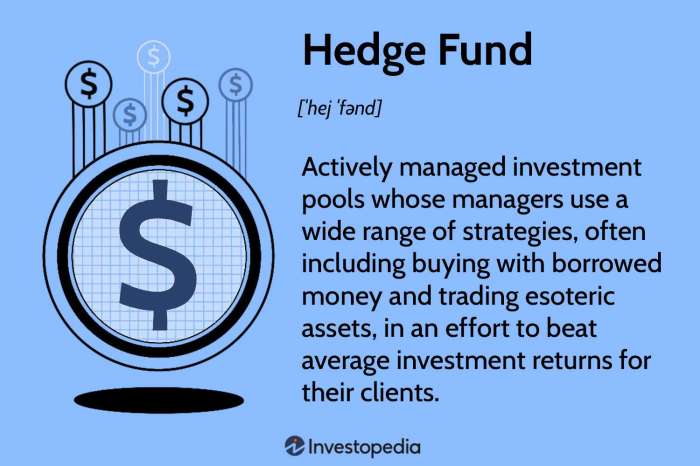
A hedge fund is an investment fund that pools capital from accredited individuals or institutional investors to invest in a variety of assets. Unlike traditional investment funds, hedge funds typically employ more complex strategies and techniques to generate returns for their investors.
Purpose and Structure of Hedge Funds
Hedge funds aim to achieve high returns by taking advantage of various market opportunities and managing risks effectively. These funds are structured as limited partnerships, with the fund manager as the general partner and the investors as limited partners.
- Hedge funds often use leverage, derivatives, and alternative investment strategies to maximize returns.
- They may also engage in short selling, which involves betting on the decline of a particular asset.
- Managers of hedge funds typically charge both a management fee (usually 1-2% of assets under management) and a performance fee (usually 20% of profits generated).
Common Strategies Used by Hedge Funds
Hedge funds employ a wide range of strategies to achieve their investment objectives. Some common strategies include:
- Long/Short Equity: Buying undervalued securities (long position) while simultaneously selling overvalued securities (short position).
- Global Macro: Making bets on macroeconomic trends by trading in currencies, commodities, and equity indices.
- Event-Driven: Profiting from events such as mergers, acquisitions, bankruptcies, or other corporate events.
Key Differences Between Hedge Funds and Mutual Funds
While both hedge funds and mutual funds pool capital from multiple investors, there are key differences between the two:
- Hedge funds are typically open only to accredited investors and have fewer regulations compared to mutual funds, which are open to retail investors and subject to stricter regulations.
- Hedge funds can use leverage and derivatives more freely, allowing for potentially higher returns but also increased risks.
- Hedge funds often have higher fees compared to mutual funds due to the performance-based fee structure.
Characteristics of Hedge Funds
Hedge funds possess unique characteristics that set them apart from other investment vehicles, making them an attractive option for certain types of investors.
Fee Structure of Hedge Funds
Hedge funds typically charge management fees and performance fees. The management fee is a percentage of assets under management, while the performance fee is a percentage of profits earned by the fund. This fee structure incentivizes fund managers to generate high returns for investors.
Types of Investors Attracted to Hedge Funds
- High-net-worth individuals: Wealthy individuals who are looking to diversify their investment portfolios and are willing to take on higher risks for potentially higher returns.
- Institutional investors: Entities such as pension funds, endowments, and foundations that seek to enhance their overall portfolio returns by investing in hedge funds.
- Sophisticated investors: Experienced investors who are knowledgeable about the financial markets and are seeking alternative investment opportunities.
Level of Risk Associated with Investing in Hedge Funds
Investing in hedge funds carries a higher level of risk compared to traditional investments such as mutual funds. Hedge funds often employ complex strategies, including leverage and derivatives, which can magnify both gains and losses. Investors should be aware of the risks involved and conduct thorough due diligence before investing in hedge funds.
Hedge Fund Strategies
When it comes to hedge fund strategies, there are several different approaches that fund managers can take to generate returns and manage risk in their portfolios.
Types of Hedge Fund Strategies
- Long-Short: Involves taking both long and short positions in different securities to profit from market movements.
- Global Macro: Focuses on macroeconomic trends and events on a global scale to make investment decisions.
- Event-Driven: Seeks to capitalize on specific events such as mergers, acquisitions, bankruptcies, or other corporate actions.
Use of Leverage and Derivatives
Hedge funds often use leverage to amplify their returns, borrowing money to increase the size of their trades. They also use derivatives such as options and futures contracts to hedge risk or speculate on price movements.
Importance of Diversification
Diversification is crucial in hedge fund portfolios to reduce risk and enhance returns. By investing in a variety of assets and strategies, hedge funds can spread out their exposure and minimize the impact of any single investment on their overall performance.
Examples of Successful Hedge Fund Strategies
- One example of a successful hedge fund strategy is the long-short equity approach employed by many funds. By identifying undervalued and overvalued stocks, these funds can profit from both rising and falling markets.
- Another example is the global macro strategy used by some funds to capitalize on major economic trends and geopolitical events, generating significant returns in the process.
In conclusion, the world of hedge funds offers a blend of risk and reward, attracting a diverse range of investors with its potential for high returns. As we part ways, the enigmatic allure of hedge funds lingers, inviting further exploration into this intriguing sector of the financial market.
Popular Questions
What risks are involved in investing in hedge funds?
Investing in hedge funds carries higher risks due to their use of leverage and complex strategies, which can lead to significant losses.
Can anyone invest in a hedge fund?
Hedge funds are typically open only to accredited investors with high net worth or institutional investors due to regulatory requirements.
How do hedge funds differ from mutual funds?
Hedge funds are less regulated, have higher fees, and employ more aggressive investment strategies compared to mutual funds.


