
How Hedge Funds Work sets the stage for this enthralling narrative, offering readers a glimpse into a story that is rich in detail with casual formal language style and brimming with originality from the outset.
As we delve deeper into the inner workings of hedge funds, we uncover a world of high-risk investments, innovative strategies, and regulatory nuances that shape the financial landscape.
Introduction to Hedge Funds
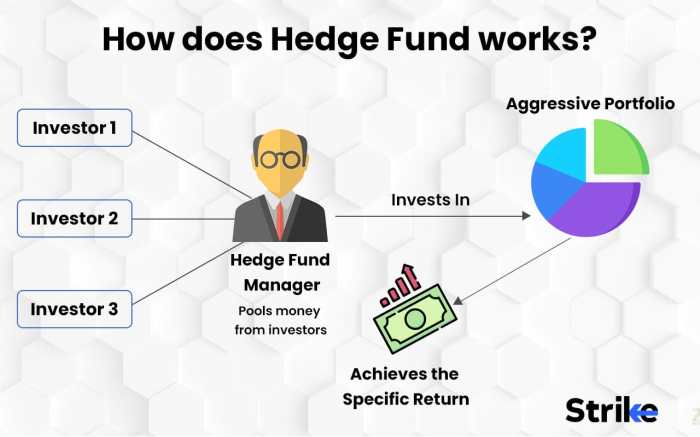
Hedge funds are investment funds that pool capital from accredited individuals or institutional investors to invest in a variety of assets. They differ from traditional investment funds in several key ways.
Key Characteristics of Hedge Funds
Hedge funds are known for their high-risk, high-return investment strategies. Unlike traditional funds, hedge funds often employ leverage and derivatives to amplify returns. Additionally, hedge funds are known for their limited regulations, allowing them more flexibility in their investment choices.
Typical Structure of a Hedge Fund
A hedge fund is typically structured with a fund manager who makes investment decisions on behalf of the fund. Investors, also known as limited partners, contribute capital to the fund and share in any profits or losses generated by the fund’s investments.
Investment Strategies Used by Hedge Funds
Hedge funds employ various investment strategies to generate returns for their investors. These strategies are often designed to take advantage of market inefficiencies and opportunities that traditional investment vehicles may not exploit.
Long/Short Equity
One common strategy used by hedge funds is long/short equity, where managers simultaneously hold long positions in undervalued securities they believe will increase in value (long) and short positions in overvalued securities they believe will decrease in value (short). This strategy aims to profit from both rising and falling markets.
Event-Driven
Event-driven strategies involve investing in securities of companies undergoing significant corporate events such as mergers, acquisitions, bankruptcies, or restructurings. Hedge funds analyze these events to identify mispricings and profit from the resulting price movements.
Macro
Macro strategies focus on making bets on broad economic trends and geopolitical events. Hedge fund managers using this strategy may invest in currencies, commodities, interest rates, or other macroeconomic indicators to capitalize on global macro trends.
Importance of Diversification
Diversification is crucial within hedge fund portfolios as it helps mitigate risk by spreading investments across different asset classes, regions, and strategies. By diversifying, hedge funds can reduce the impact of negative performance in any single investment on the overall portfolio.
Fee Structure and Performance Fees
When it comes to hedge funds, understanding the fee structure is essential for investors. Hedge funds typically charge both management fees and performance fees, which can impact the overall returns for investors.
Management Fees
Management fees are typically charged as a percentage of the total assets under management. This fee is paid regularly, usually on a monthly or quarterly basis, and is meant to cover the operational costs of running the hedge fund.
Performance Fees
Performance fees are an incentive-based fee structure that rewards fund managers for generating positive returns. This fee is calculated as a percentage of the profits earned by the fund and is usually subject to a high watermark, ensuring that managers are only compensated for new gains above a certain threshold.
Performance fees are crucial for aligning the interests of fund managers with those of the investors, as managers are incentivized to deliver strong performance in order to earn higher fees.
Comparison with Traditional Mutual Funds
Unlike traditional mutual funds that typically charge a fixed management fee, hedge funds have a performance fee component that can significantly impact returns. While this fee structure can lead to higher costs for investors, it also incentivizes fund managers to strive for better performance to generate profits and earn their fees.
Regulation and Oversight of Hedge Funds
Regulation and oversight of hedge funds play a crucial role in maintaining market integrity and protecting investors. Unlike mutual funds, hedge funds operate under different regulatory frameworks due to their more sophisticated and high-risk investment strategies.
Regulatory Environment
Hedge funds are subject to less stringent regulations compared to mutual funds. They are typically only available to accredited investors who meet specific criteria, such as high net worth or income requirements. This exclusivity allows hedge funds to operate with more flexibility and take on higher levels of risk.
Role of Regulatory Bodies
The Securities and Exchange Commission (SEC) is the primary regulatory body overseeing hedge fund activities in the United States. The SEC monitors compliance with securities laws, investigates potential misconduct, and enforces rules to protect investors. However, hedge funds often face less regulatory scrutiny compared to other investment vehicles, leading to concerns about transparency and accountability.
Controversy and Arguments
- Proponents of increased oversight argue that tighter regulations would enhance market stability, prevent fraud, and improve investor protection. They believe that greater transparency and reporting requirements would benefit all stakeholders.
- On the other hand, opponents of heightened regulation argue that it could stifle innovation and hinder the ability of hedge funds to generate high returns. They contend that the exclusivity and flexibility of hedge funds are essential for their success and that increased oversight could have unintended consequences.
- There is ongoing debate within the financial industry and among policymakers about the appropriate level of regulation for hedge funds, balancing the need for investor protection with the desire for a dynamic and competitive market environment.
In conclusion, How Hedge Funds Work sheds light on the intricacies of this complex financial sector, highlighting the dynamic interplay between risk, return, and regulation. Dive into the world of hedge funds with a newfound understanding of their operations and impact on the global economy.
Top FAQs
What are the typical characteristics of hedge funds?
Hedge funds are known for their high-risk nature, potential for high returns, and limited regulatory oversight compared to traditional investment funds.
How do hedge fund managers earn their fees?
Hedge fund managers typically earn management fees and performance fees, with the latter being tied to the fund’s profits. This fee structure incentivizes managers to strive for higher returns.
Why is diversification important in hedge fund portfolios?
Diversification helps hedge funds mitigate risk by spreading investments across different assets, reducing the impact of a single investment’s performance on the overall portfolio.


