
Exploring the intricate world of Hedge Fund Fees and Costs, this introduction sets the stage for a deep dive into the financial realm, offering insights that are both informative and captivating.
Detailing the complexities of fees and costs associated with hedge funds, this overview aims to shed light on the often opaque aspects of this investment vehicle.
Introduction to Hedge Funds
Hedge funds are investment funds that pool capital from accredited investors or institutional investors to invest in a variety of assets. Unlike traditional investment funds, hedge funds typically have more flexibility in their investment strategies and are known for their ability to generate high returns.
Key Characteristics of Hedge Funds
- Hedge funds are typically only available to accredited investors or institutional investors due to regulatory requirements.
- Hedge funds often use leverage to amplify returns, although this also increases risk.
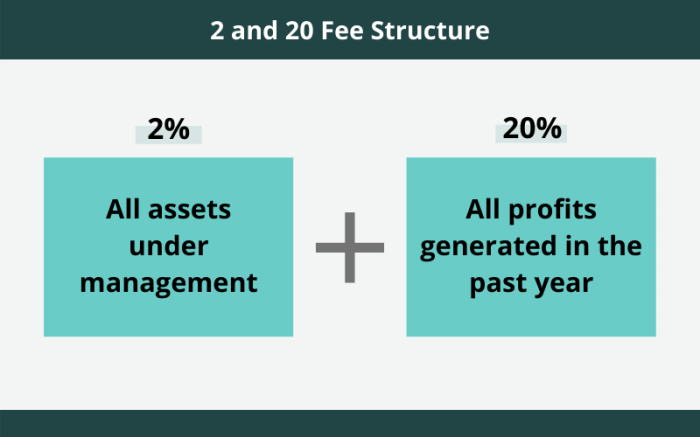
- Hedge funds charge both a management fee (usually a percentage of assets under management) and a performance fee (a percentage of profits).
Typical Strategies Employed by Hedge Funds
- Long/Short Equity: Hedge funds take both long and short positions in equities to profit from both rising and falling stock prices.
- Global Macro: Hedge funds invest based on macroeconomic trends and events that affect global markets.
- Arbitrage: Hedge funds exploit price differentials in different markets or asset classes to generate profits.
- Event-Driven: Hedge funds focus on opportunities arising from corporate events such as mergers, acquisitions, or bankruptcies.
Hedge Fund Fees and Costs
When investing in hedge funds, it is important to understand the various types of fees and costs associated with them. These fees can impact your overall returns and should be carefully considered before making any investment decisions.
Types of Fees Charged by Hedge Funds
- Management Fees: These fees are charged by the hedge fund manager for managing the fund’s investments. They are typically calculated as a percentage of the assets under management.
- Performance Fees: Also known as incentive fees, these fees are based on the hedge fund’s performance relative to a benchmark. If the fund outperforms the benchmark, the manager is entitled to a percentage of the profits.
- Administrative Fees: These fees cover the operational costs of running the hedge fund, such as legal and accounting expenses.
Fee Structures and Calculations
Management fees are usually around 1-2% of assets under management, while performance fees can range from 10-20% of the profits generated by the fund. The exact fee structure varies from fund to fund and is typically Artikeld in the fund’s offering documents.
Comparison with Other Investment Vehicles
- Hedge funds generally have higher fees compared to mutual funds, which typically charge an annual management fee of around 0.5-1% of assets under management.
- Unlike mutual funds, hedge funds also charge performance fees, which can result in higher total fees paid by investors, especially if the fund performs well.
Management Fees
Management fees are charges levied by hedge fund managers for managing investors’ capital and making investment decisions on their behalf. These fees are typically calculated as a percentage of the assets under management (AUM) and are meant to compensate the fund managers for their expertise and efforts in generating returns for investors.
Purpose of Management Fees
Management fees serve as the primary source of revenue for hedge fund managers, enabling them to cover operational costs, salaries, research expenses, and other overheads associated with running the fund. By charging management fees, fund managers are incentivized to actively manage the fund’s portfolio and strive to achieve superior returns for investors.
Impact on Investors’ Returns
The management fees directly impact investors’ returns by reducing the overall profits generated by the fund. For example, if a hedge fund charges a 2% management fee on AUM and achieves a 10% annual return, the net return for investors would be reduced to 8% after deducting the management fee. Therefore, it is crucial for investors to carefully consider the fee structure and its impact on their investment returns.
Examples of Management Fee Structures
Fixed Management Fee
A set percentage of AUM charged as a management fee, typically ranging from 1% to 2%.
Performance Fee
In addition to the fixed management fee, a performance fee is charged based on the fund’s returns exceeding a specified benchmark, such as 20% of profits.
High-Water Mark
A performance fee structure where the fund manager can only charge a performance fee on new profits that exceed the previous highest net asset value (NAV) achieved by the fund.
Performance Fees
Performance fees are an additional fee that hedge fund managers charge based on the fund’s performance. These fees are typically calculated as a percentage of the profits generated by the fund.Performance fees incentivize fund managers to perform well and generate positive returns for investors. Since managers only earn these fees when the fund outperforms a certain benchmark or achieves a specified level of return, they are motivated to make strategic investment decisions and actively manage the fund to maximize returns.However, the impact of performance fees on investors’ overall returns can be significant.
While these fees can align the interests of fund managers with those of investors, they can also eat into profits and reduce the net returns that investors actually receive. It is essential for investors to carefully consider the fee structure, including performance fees, when evaluating a hedge fund investment to ensure that they are comfortable with the potential impact on their returns.
Hidden Costs in Hedge Funds
When investing in hedge funds, it is crucial for investors to be aware of hidden costs that may not be immediately apparent. These costs can significantly impact the overall return on investment, making it essential to uncover and mitigate them effectively.
Types of Hidden Costs
- Trading Costs: Hedge funds engage in frequent trading, which can lead to high transaction costs that are often overlooked by investors. These costs include brokerage fees, market impact costs, and bid-ask spreads.
- Administrative Costs: Hedge funds incur various administrative expenses, such as legal and compliance fees, audit fees, and operational costs. These costs can add up and reduce the overall returns for investors.
- Performance Fees on Unearned Profits: Some hedge funds charge performance fees on unearned profits, which means investors may end up paying fees even if the fund’s performance is negative. This can erode returns over time.
Strategies to Uncover and Mitigate Hidden Costs
- Due Diligence: Conduct thorough due diligence on the hedge fund’s fee structure and ask for a breakdown of all costs involved. Transparency is key in uncovering hidden costs.
- Negotiation: Negotiate with the fund manager to reduce or cap certain fees, especially if you are investing a significant amount of capital. Some managers may be willing to adjust their fee structure to attract larger investors.
- Performance Monitoring: Continuously monitor the fund’s performance and compare it to the fees being charged. If the fund is underperforming and the fees are high, it may be time to reconsider the investment.
In conclusion, understanding the nuances of Hedge Fund Fees and Costs is crucial for investors looking to navigate the financial markets effectively, making informed decisions for their portfolios.
Popular Questions
What are some common hidden costs in hedge funds?
Common hidden costs in hedge funds include trading costs, legal fees, and operational expenses.
How do performance fees impact investor returns?
Performance fees incentivize fund managers to outperform, but they can also reduce overall returns for investors.
What sets hedge fund fee structures apart from mutual funds?
Hedge funds often have higher management and performance fees compared to mutual funds, reflecting the active management and potential for higher returns.


